
 English
 Español
 Deutsch
 عربى
عربى
 +86 17398543323
 +86 17398543323
Lishui City Jialida Bearing Co., Ltd. is a company specializing in R&D, production and operation of linea motion series transmission components.
Enhanced Adaptive Stable Linear Bearings
LMES
Selecting the correct size and specification for a CNC linear guide rail system is a critical step in machine tool design or refurbishment. An appropriately sized guide ensures that the machine can handle its intended work without compromise, while an incorrect selection can lead to premature wear, reduced accuracy, or inadequate stiffness. This process requires moving beyond brand preference to a technical assessment of load, life, accuracy, and the specific demands of different machine types, from high-speed routers to heavy milling centers.
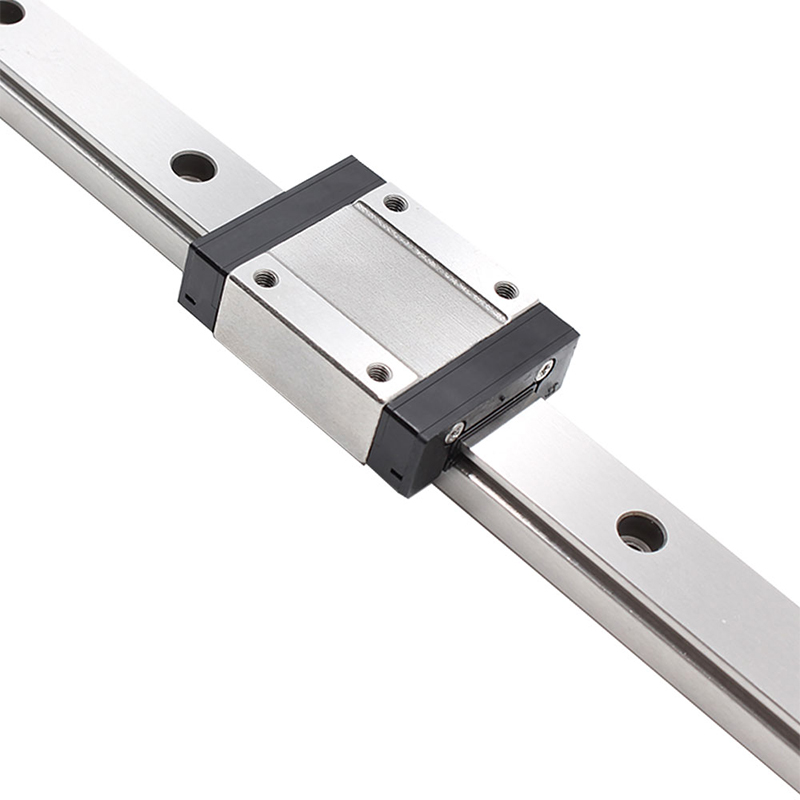
The selection process is built on a few core engineering parameters. The first is load capacity, and the calculated service life. Manufacturers provide dynamic and static load ratings. The basic rating life calculation, often called L10 life, uses the dynamic load rating and the applied operational loads to estimate the travel distance over which 90% of a group of identical guides would be expected to operate without material fatigue. This calculation helps determine if a guide's size is sufficient for the machine's duty cycle and reliability targets.
Accuracy grade is another specified parameter. Linear guides are manufactured to different tolerance classes, which govern the straightness of the raceways, the height variation between blocks, and the running parallelism. Selecting a grade involves aligning the guide's inherent precision with the machine's overall positioning accuracy needs. Using a guide with tolerances far tighter than the rest of the machine's system may not yield a meaningful benefit for the additional cost.
Preload is a controlled internal clearance or interference within the guide block. Adjusting preload influences system rigidity and running smoothness. A guide with light or no preload has less rolling resistance and may run cooler, suited for applications where friction must be very low. A guide with medium or heavy preload has less internal deflection under load, increasing rigidity, which is desirable for machining applications subject to side forces. The choice involves a balance between stiffness and the increased friction and heat generation that comes with higher preload.
The application of these parameters changes with machine type. For high-speed machining centers and milling machines, the priorities are often velocity, acceleration, and precision. Here, guides with a precision grade suited to the machine's target tolerances are selected. A focus on maintaining low friction and smooth operation at speed might guide the preload selection, and the load life calculation must account for the dynamic forces of rapid starts and stops, not just cutting forces.
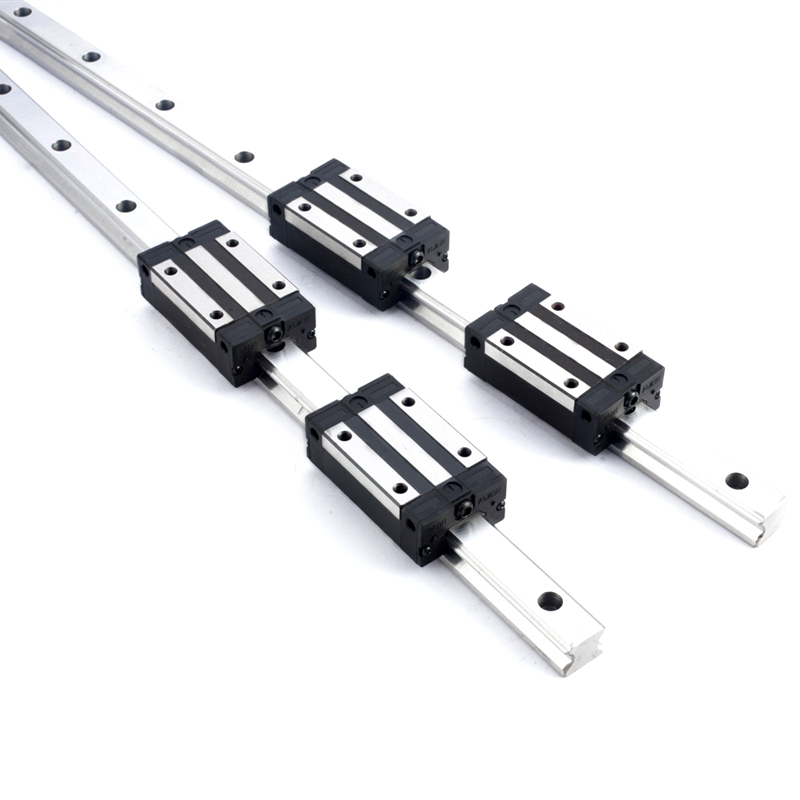
Heavy-duty machines like gantry mills or large boring machines present a different set of requirements. The primary concerns shift to rigidity under substantial cutting loads and the ability to support great mass. This often leads to the selection of larger rail sizes (e.g., 45mm or 55mm widths) and the specification of heavier preload classes. It is also common to use multiple guide blocks on a single rail or to install rails in parallel to manage large overturning moments and distribute the load.
For smaller machines like engravers, routers, or tool-changing mechanisms, the loads are lowerand space can be constrained. Here, compact guide sizes (e.g., 15mm or 20mm widths) are typical. The selection focuses on sufficient load capacity for the application while meeting precision needs, often with consideration for the guide's mounting footprint and height to integrate cleanly into a compact design.
A structured approach can demystify the sizing task. It begins with clearly defining the operating conditions: the magnitudes and directions of all loads (including the weight of the moving component, cutting forces, and acceleration forces), the required travel speed and distance, the target positioning repeatability, and the environmental conditions. With this data, an initial guide size can be proposed based on the load-life calculation. The next step is a practical check: does this guide's physical dimensions (width, height, bolt pattern) fit within the machine's mechanical design? Will standard rail lengths accommodate the travel, or are special lengths needed?
Finally, the selection should be reviewed against the machine's performance goals. Does the chosen guide's rigidity contribute sufficiently to the overall structural loop stiffness? Are the seals adequate for the workshop environment? Many guide manufacturers provide software tools or detailed catalogs with selection examples that can serve as a useful reference and validation step.
Properly sizing a CNC linear guide rail is an exercise in applied engineering judgment. It requires synthesizing knowledge of the guide system's properties with a clear understanding of the machine's functional demands and physical constraints. By following a disciplined process that evaluates load life, accuracy needs, rigidity requirements, and spatial integration, designers and engineers can specify a guide system that performs reliably. This careful selection forms a solid foundation for the machine's motion, supporting consistent performance and contributing to the machine's functional longevity and value in production.

Lishui City Jialida Bearing Co., Ltd. is a company specializing in R&D, production and operation of linea motion series transmission components.
Copyright © Lishui City Jialida Bearing Co., Ltd. All rights reserved.
