
 English
 Español
 Deutsch
 عربى
عربى
 +86 17398543323
 +86 17398543323
Lishui City Jialida Bearing Co., Ltd. is a company specializing in R&D, production and operation of linea motion series transmission components.
Enhanced Adaptive Stable Linear Bearings
LMES
Unexpected linkage failure can interrupt production, increase maintenance costs, and affect the performance of industrial equipment. In machinery with repeated pivoting movements, the condition of each joint directly influences operational stability. A Ball joint rod end bearing provides flexible articulation between connected components, but its service life depends on load conditions, installation accuracy, and the surrounding environment. For equipment manufacturers and industrial buyers, understanding common failure patterns is a practical way to improve component selection and reduce avoidable downtime.
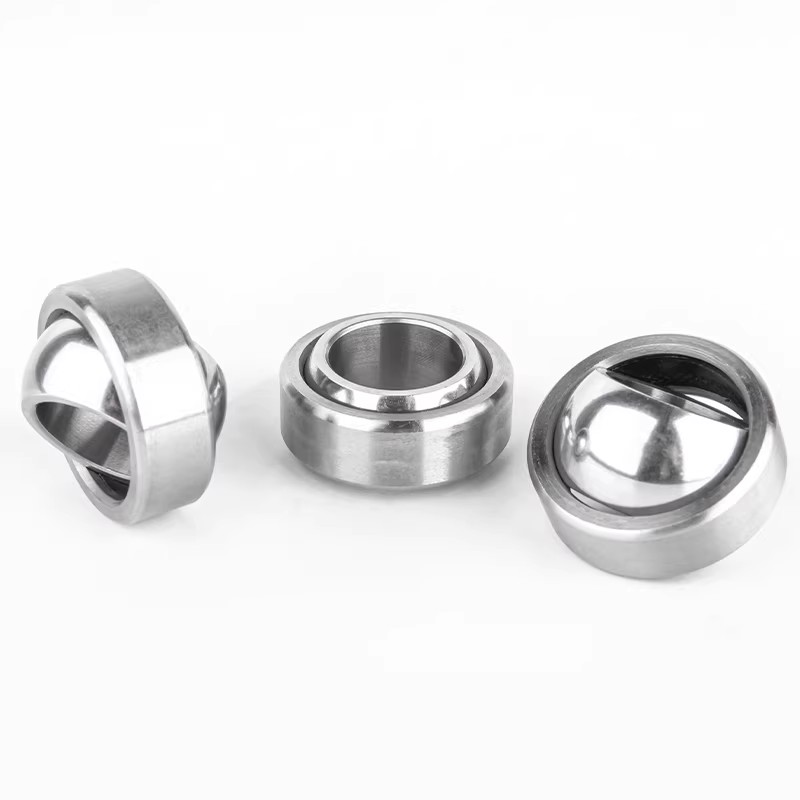
Wear often develops gradually before a linkage becomes noticeably unstable. Maintenance teams may first observe increased clearance, irregular movement, or a change in operating noise. If these signs are overlooked, excessive play can affect positioning accuracy and place additional stress on connected parts.
During routine inspections, engineers should compare the joint's movement with its normal operating condition. Unusual resistance may indicate contamination, corrosion, lubrication problems, or surface damage. Identifying the cause early helps prevent unnecessary replacement of surrounding components and makes maintenance decisions more reliable.
Unlike bearings that rotate continuously, rod end bearings frequently operate through limited angular movements. This type of motion can create localized wear because the contact surfaces repeatedly move across a restricted area rather than distributing movement over a full rotation.
Applications such as automation linkages, agricultural machinery, and hydraulic cylinder connections may experience different combinations of oscillation, vibration, and load reversal. When evaluating a replacement bearing, buyers should provide information about movement frequency, working angles, and load direction. These details help manufacturers assess whether the selected bearing design is appropriate for the application.
Lubrication requirements depend on the bearing's internal construction. Lubricated metal-to-metal designs generally require an appropriate lubrication schedule, while some PTFE-lined bearings are designed to operate without routine relubrication under specified conditions.
Applying grease indiscriminately is not a suitable maintenance strategy. Excess lubricant may attract dust in exposed environments, while incompatible lubricants can affect certain materials. Maintenance teams should follow the product specifications and consider protective measures where dirt, moisture, or abrasive particles can reach the joint.
For equipment operating outdoors, inspection should also include surrounding seals, protective covers, and mounting interfaces where applicable.
Incorrect installation can shorten bearing life even when the component itself meets the required specifications. Misaligned mounting points may introduce unintended loads, while insufficient thread engagement can compromise the security of the connection.
Before commissioning equipment, verify the following details:
These checks are especially important when replacing worn components in existing machinery, where previous modifications may have affected the original alignment.
Material selection, housing construction, and sliding surface design all influence how a rod end bearing performs. Standard steel configurations may suit many general industrial applications, while stainless steel options can be considered for environments where corrosion resistance is a priority.
Buyers should also evaluate temperature exposure, shock loading, required movement, and maintenance accessibility. A low-maintenance design may be attractive for equipment installed in difficult-to-access locations, but compatibility with the actual load and operating conditions remains essential. Comparing complete specifications is more useful than choosing a bearing by dimensions or price alone.
Replacing a bearing only after complete failure can increase downtime and place additional stress on connected mechanisms. A more effective approach combines scheduled inspections with maintenance records. Tracking clearance changes, corrosion, lubrication intervals, and recurring installation issues helps teams recognize patterns across similar machines.
For procurement departments, maintaining accurate part numbers and dimensional records also simplifies repeat orders. When requesting quotations, provide technical drawings, thread details, load information, and environmental requirements whenever available. This allows the manufacturer to assess compatibility before supplying replacement components.
Reliable bearing performance begins with clear technical requirements and continues through manufacturing quality control, correct installation, and appropriate maintenance. As a manufacturer, we help customers evaluate dimensional requirements, material choices, and operating conditions to identify suitable linkage components for their equipment.
Choosing the right Ball joint rod end bearing is not simply a replacement decision. It is an opportunity to address the causes of recurring wear, improve maintenance planning, and support more consistent machine operation. With careful specification and regular inspection, industrial buyers can reduce avoidable component problems and make better-informed sourcing decisions.

Lishui City Jialida Bearing Co., Ltd. is a company specializing in R&D, production and operation of linea motion series transmission components.
Copyright © Lishui City Jialida Bearing Co., Ltd. All rights reserved.
