Product Definition
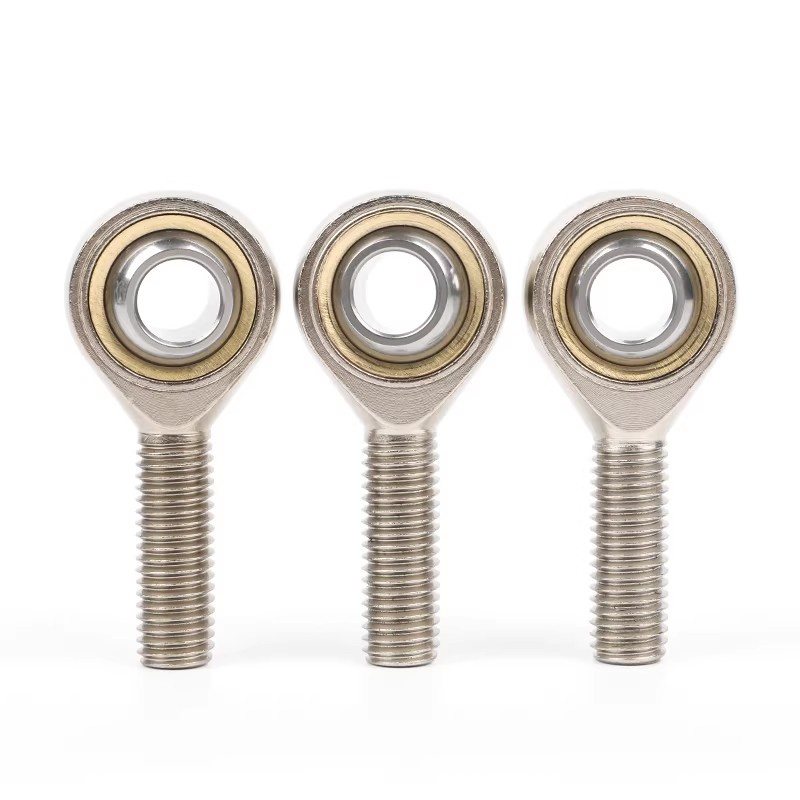
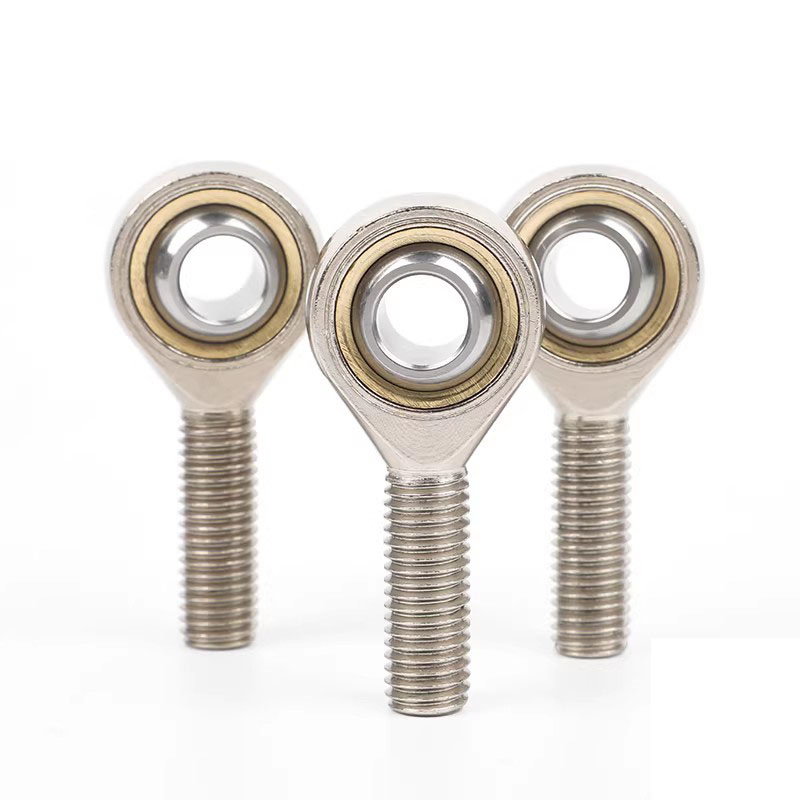
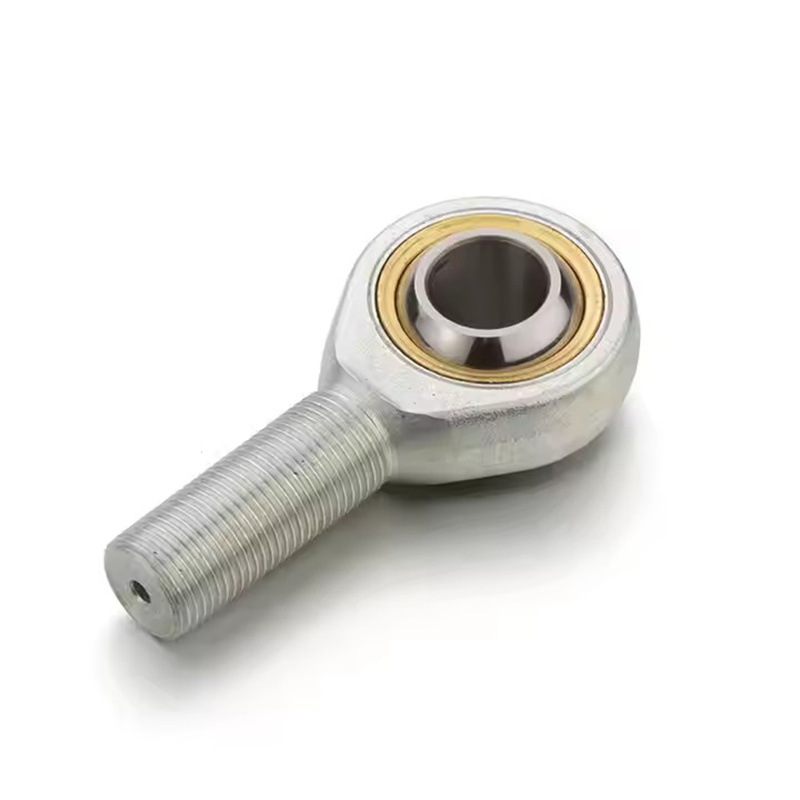
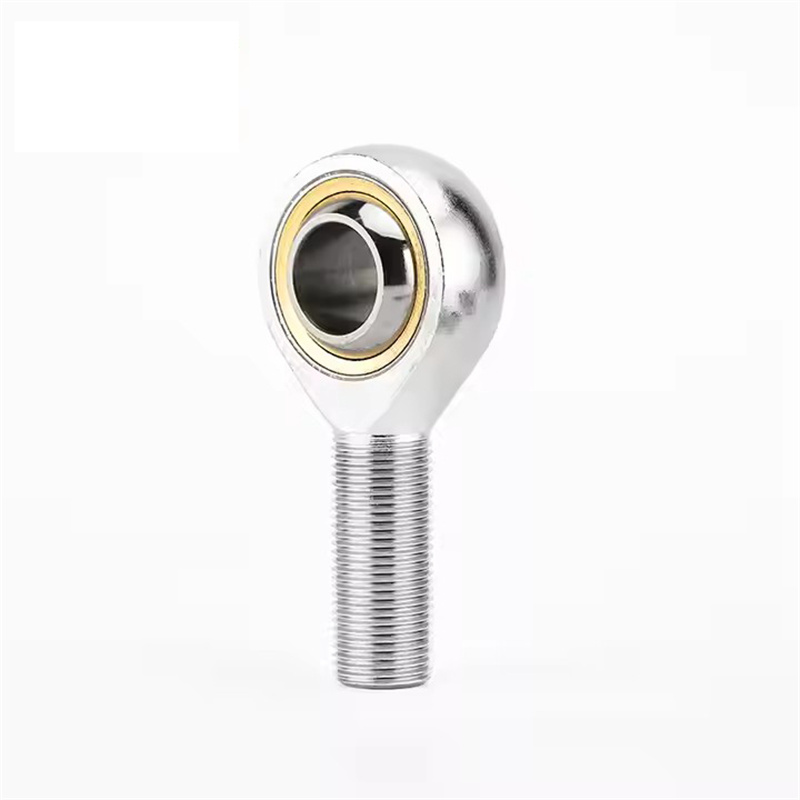
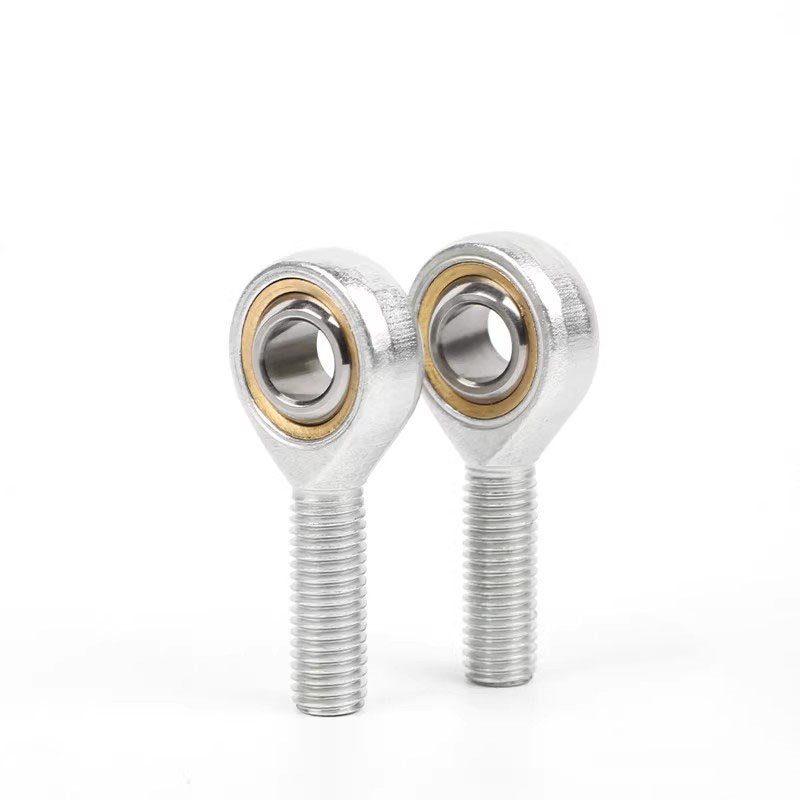
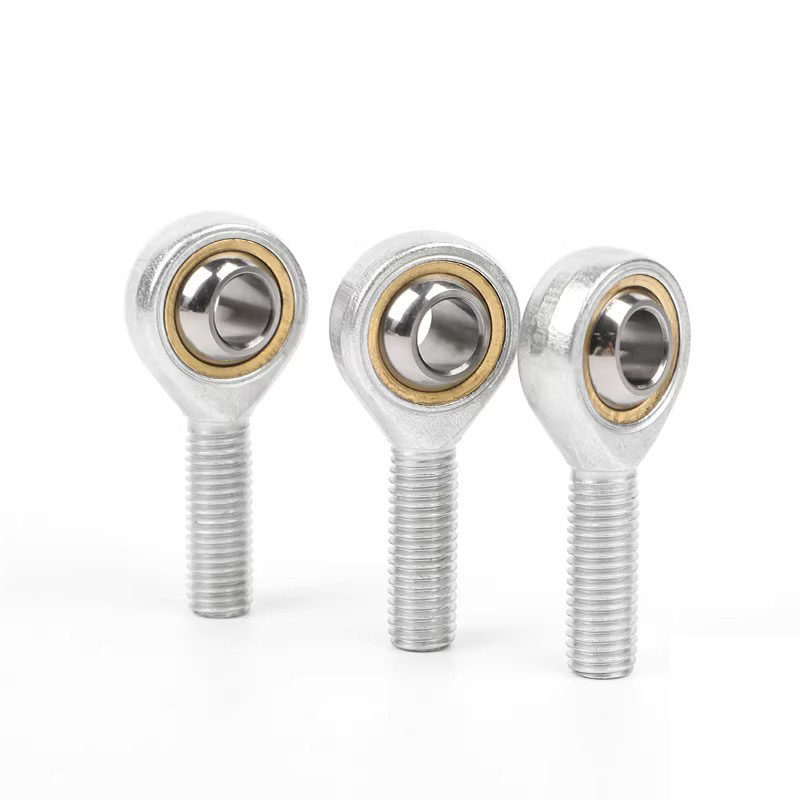
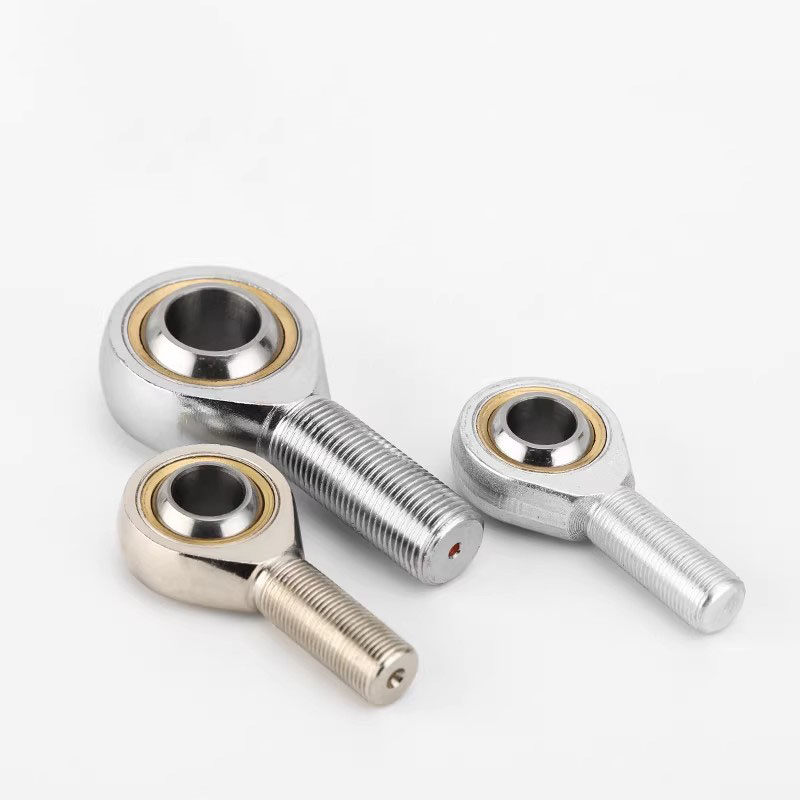
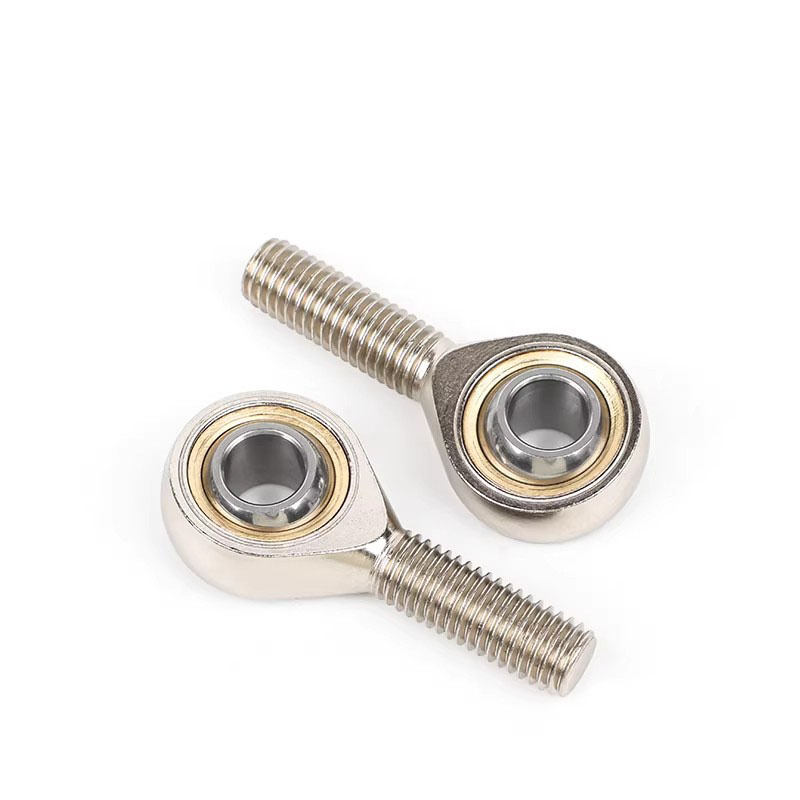
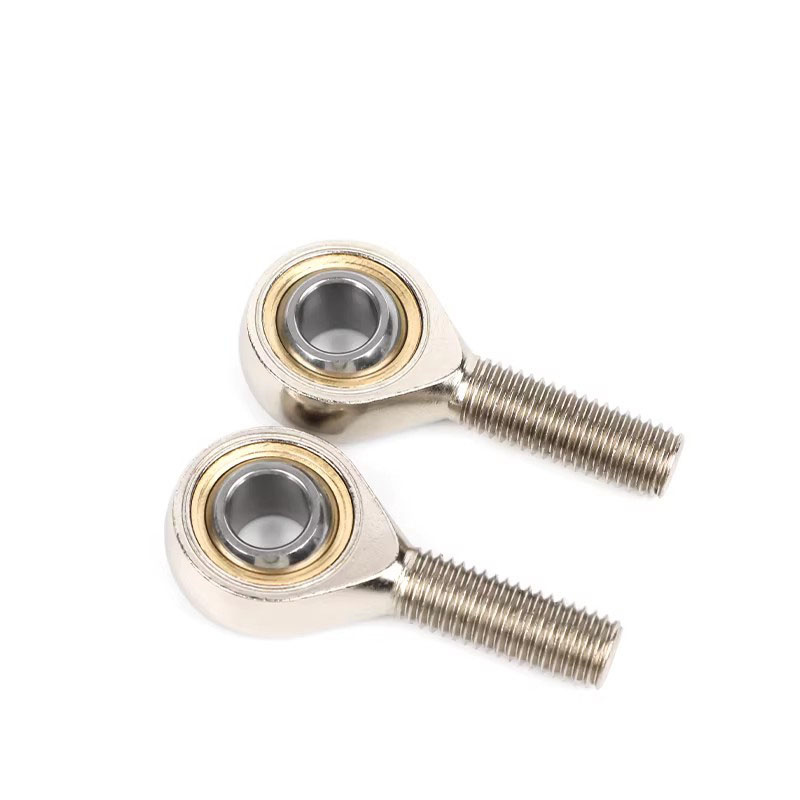
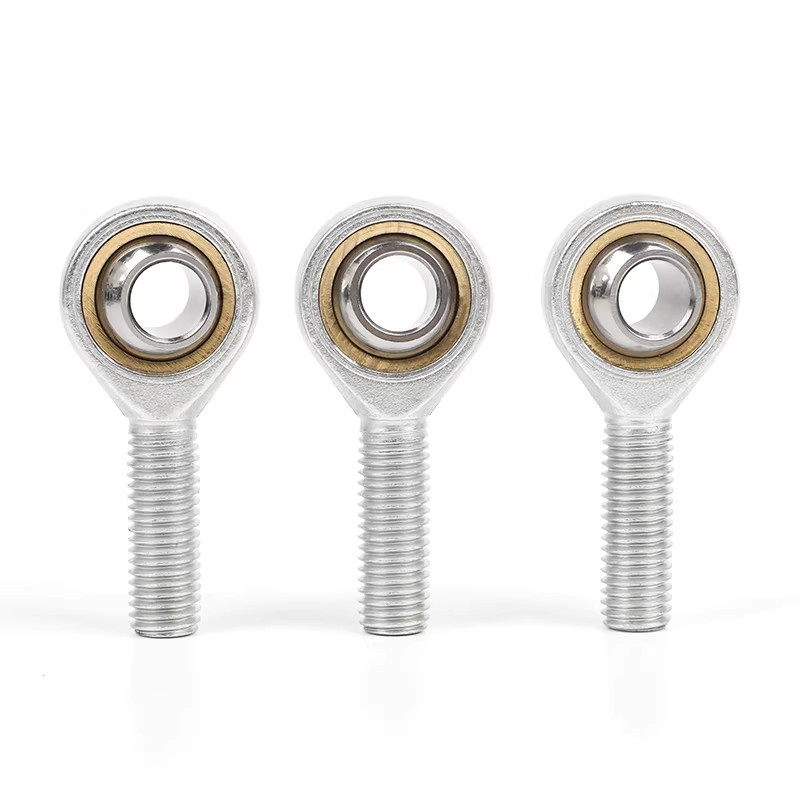
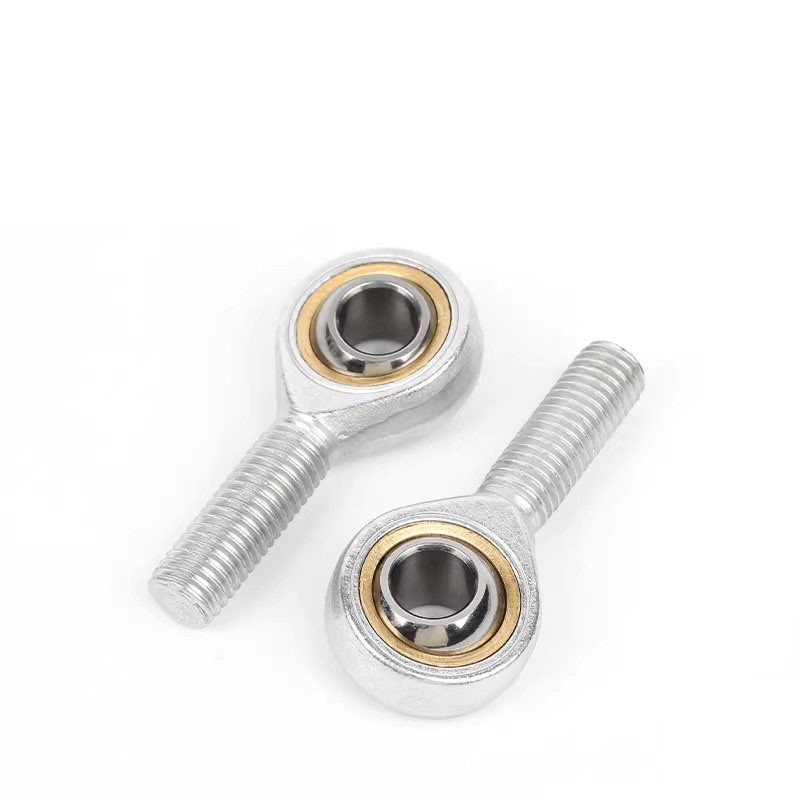
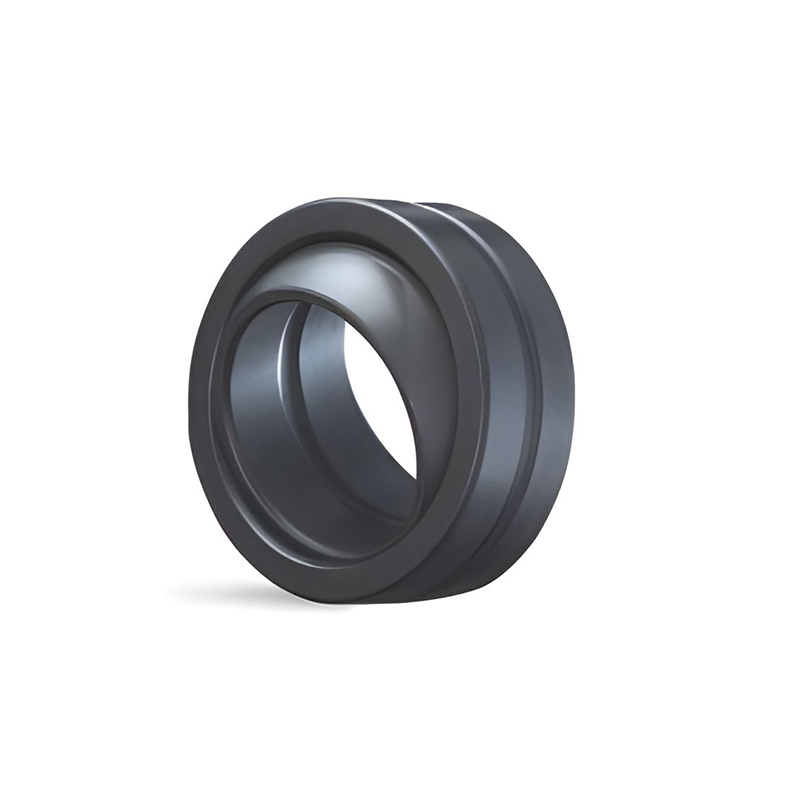
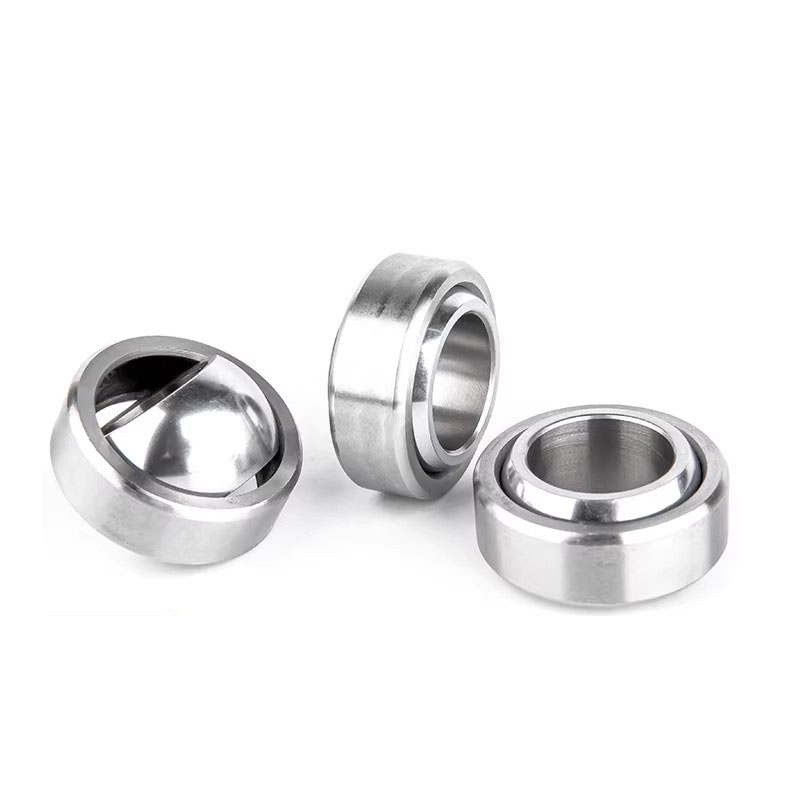
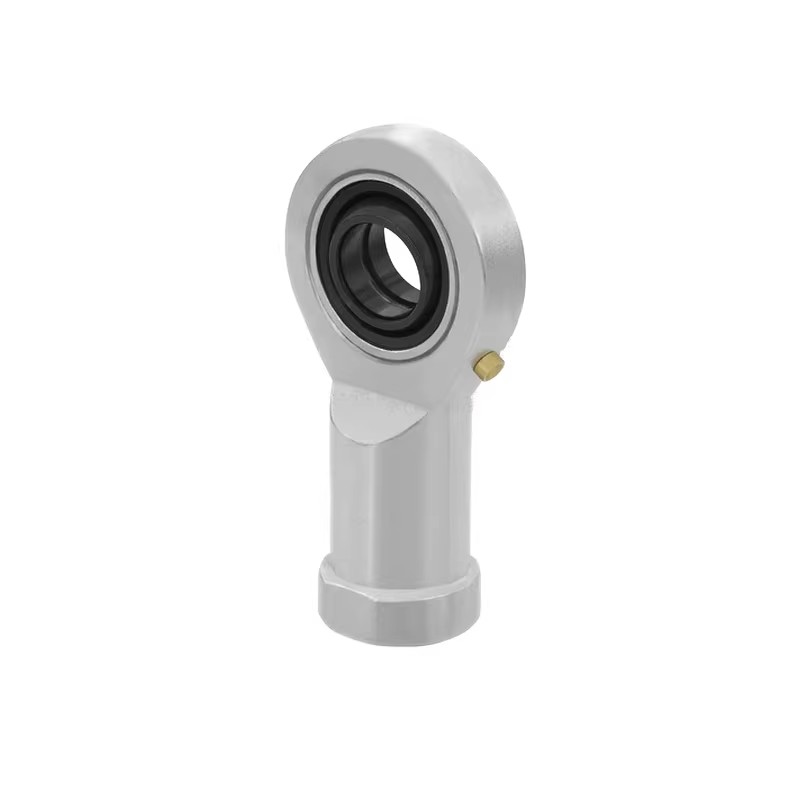
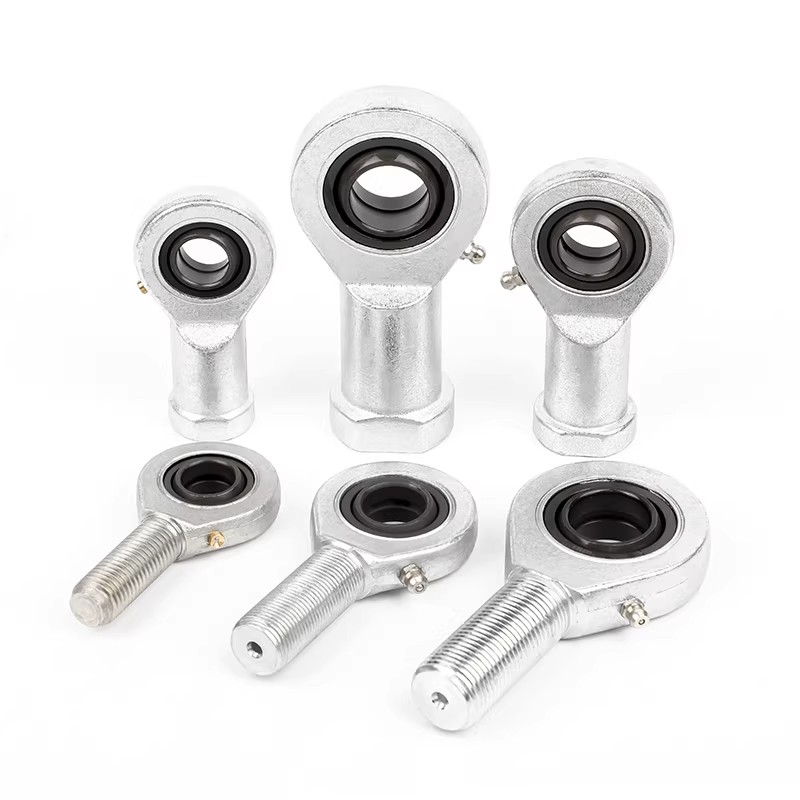
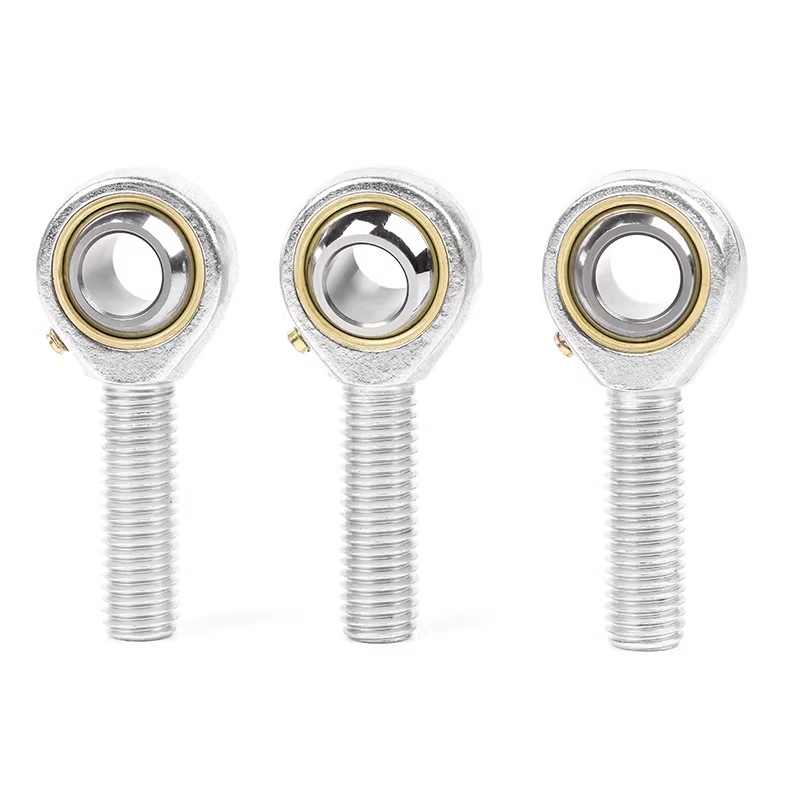
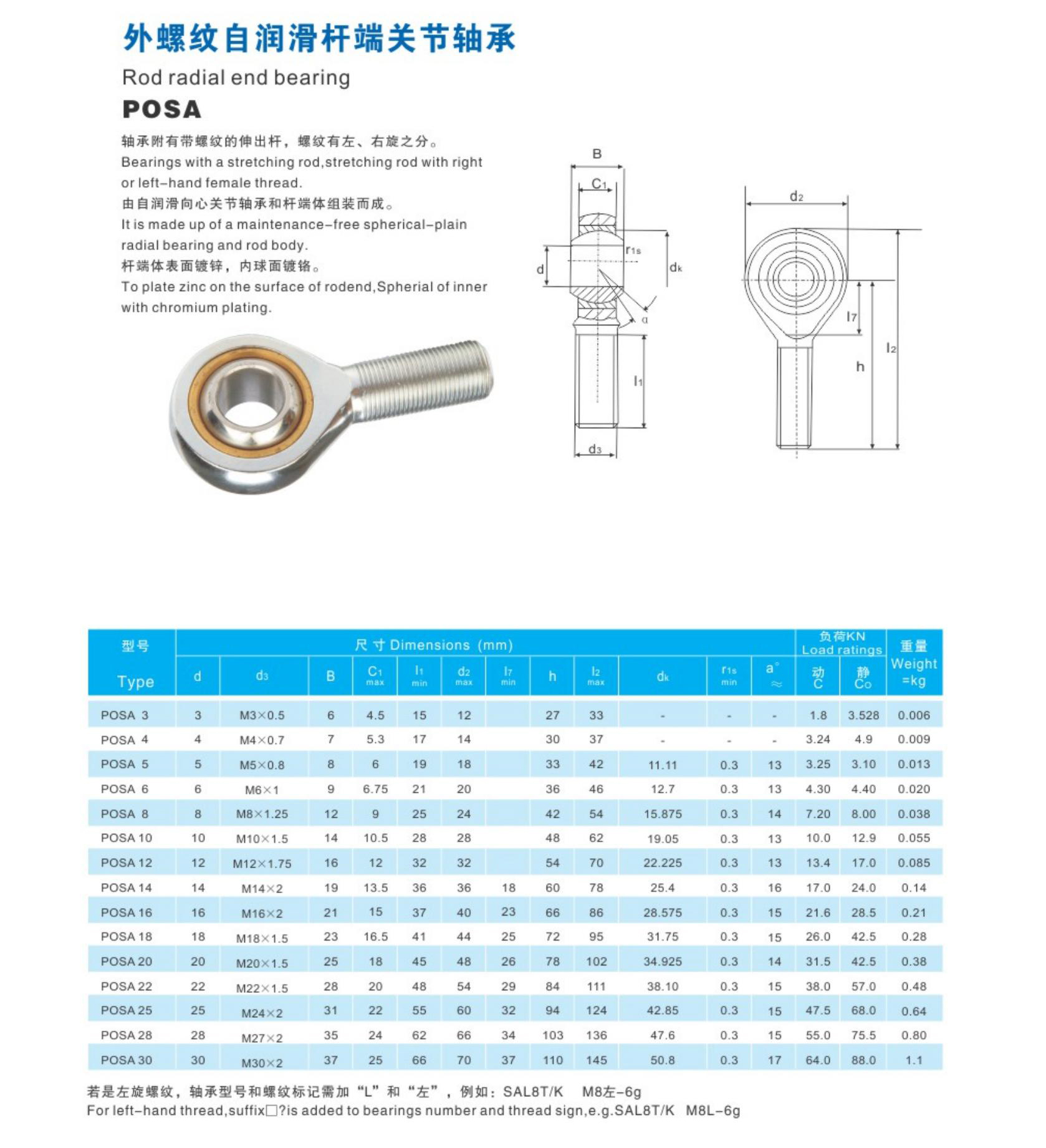
Rod end bearings, also known as spherical plain bearings with rod ends or rod eyes, belong to the category of spherical plain bearings. Their core function is to enable multi-angle swinging, tilting, and low-speed rotation of mechanical components, transmit loads, and compensate for installation deviations and axial misalignment. With a simple structure and unique spherical contact design, they can operate stably under conditions of low concentricity requirements and high surface pressure, serving as key connecting components between transmission systems and executive components, and are widely used in various industrial scenarios.
Structural Composition and Classification
(1) Core Structure
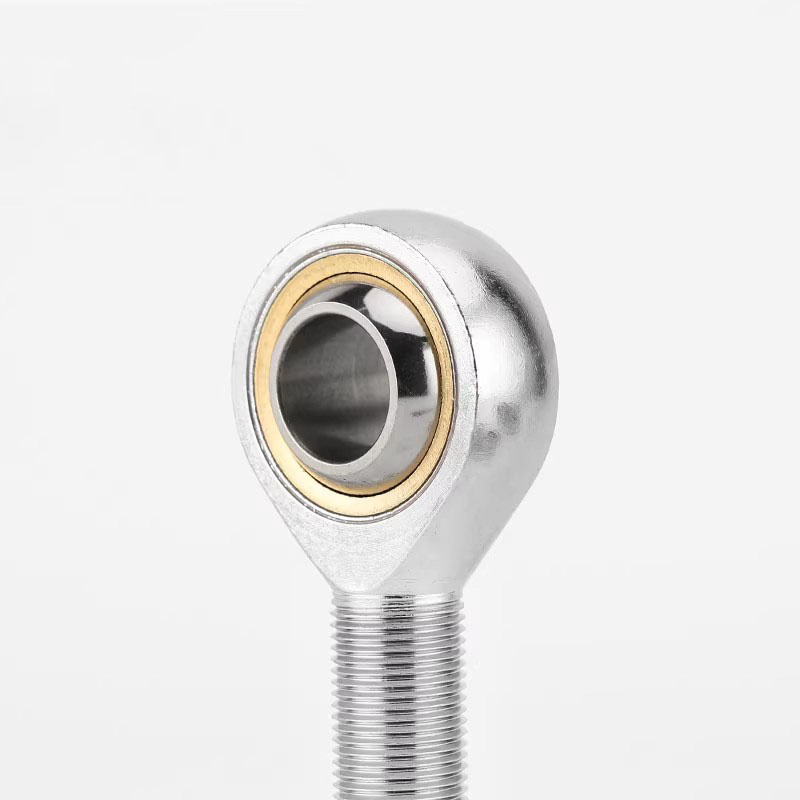
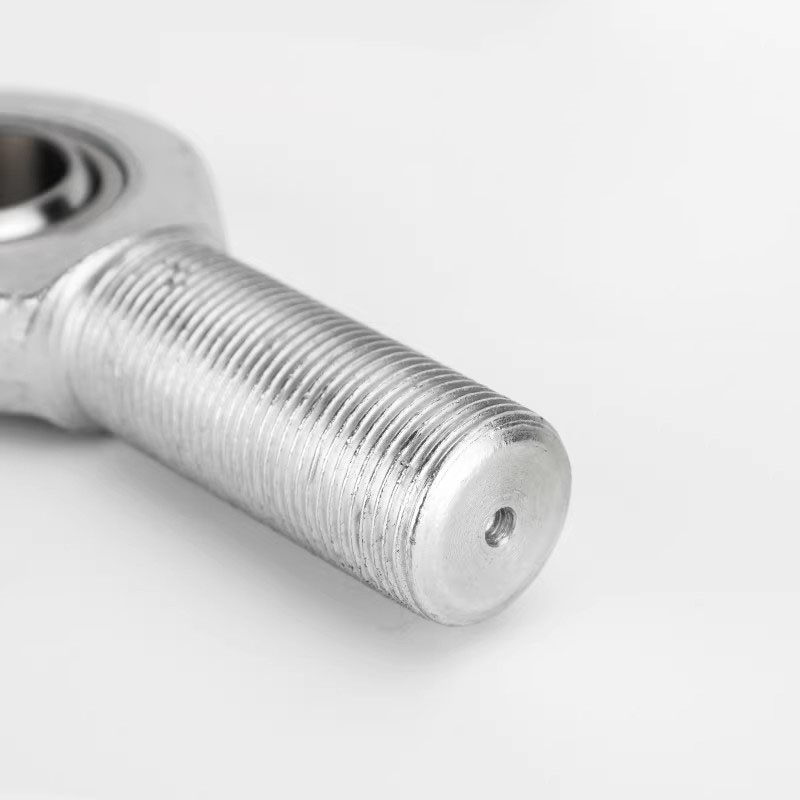
Rod end bearings consist of a bearing body, a rod end shaft, and auxiliary components: The bearing body adopts a classic "outer spherical inner ring + inner spherical outer ring" structure, and some products are embedded with composite materials to achieve self-lubrication; the rod end shaft can be designed as threaded, welded, etc., to adapt to different installation needs; high-end products are integrated with sealing components to enhance protective performance. Common materials include bearing steel and chromium-molybdenum alloy steel, with surface treatments such as phosphating, galvanizing, chrome plating, or ion nitriding. The sliding surfaces are mostly paired with steel-steel, steel-copper, or steel-composite materials to balance wear resistance and load-carrying capacity.
(2) Main Classifications
According to different standards such as lubrication method and thread type, rod end bearings can be divided into multiple categories to accurately adapt to various application scenarios:
● By Lubrication Method: Divided into maintenance-required type and maintenance-free type. The maintenance-required type needs regular grease replenishment and is suitable for heavy-load and high-temperature working conditions; the maintenance-free type achieves self-lubrication through solid lubricating particles, reducing downtime and maintenance costs.
● By Thread Type: Internal thread (prefix I) and external thread (prefix A), supporting left-hand and right-hand rotation, including metric and imperial standards, and the connection length can be adjusted to adapt to assembly.
● By Structural Type: In accordance with GB/T9161 standard, including bent rod open ball head (SQ), welded type (SK/SF), etc., as well as slotted shank type suitable for hydraulic cylinders.
● By Size Series: Including enhanced types such as EH and EG, as well as imperial Z series and JK series, with load-carrying capacity and installation dimensions adapted to different specifications of equipment.
Core Performance and Advantages
Relying on optimized structural design and precision machining technology, rod end bearings can adapt to various complex working conditions, with the following core performance and advantages:
● Strong Load-Carrying Capacity: Large spherical contact area, combined with high-strength materials and integral forging technology, can bear radial, axial, or combined loads, with excellent impact resistance; some products can withstand impact loads up to 4500 N/mm².
● High Motion Freedom: Supports ±25° swing, can achieve compound motion with a swing frequency of up to 120 times per minute, and can absorb ±1.5° axial misalignment to reduce assembly stress.
● Wide Adaptability: Operating temperature ranges from -30℃ to 150℃, and the high-temperature type can reach 260℃; the 316L stainless steel material has a salt spray test of more than 1000 hours, with corrosion and wear resistance, suitable for harsh environments.
● Good Usability: Compact structure and easy installation; the threaded type can be precisely adjusted, and the welded type can be directly fixed; some products reach IP67 protection to block the intrusion of impurities.
● Low Maintenance Cost: The maintenance cycle of maintenance-free products can reach 8000 hours, without frequent grease replenishment, reducing labor and downtime losses.
Application Fields
Relying on the above multi-dimensional performance advantages, rod end bearings are widely used in various industries, with the following core application scenarios:
● Construction Machinery: Suitable for connecting connecting rods and piston rods of equipment such as excavators and cranes, withstanding heavy loads and high-frequency swings, and improving operational stability.
● Automation and Robotics: Used in robot arms and automated production lines to ensure precise movement, absorb vibration, and reduce noise.
● Transportation: Applied to automotive shock absorbers and rail transit transmission components, adapting to complex road conditions and ensuring safe and stable driving.
● High-End Equipment: Suitable for aerospace, ships, steel continuous casting machines, etc., withstanding extreme environments and meeting strict operational requirements; also used in agricultural machinery.
● General Machinery: Used in injection molding machines, hydraulic machinery, etc., to solve the problem of insufficient concentricity and improve equipment operating efficiency and service life.
Installation, Maintenance and Fault Diagnosis
(1) Installation Specifications
Correct installation is the key to extending the service life of rod end bearings, and the following specifications must be followed:
● When no press is available, use a mounting sleeve and a small hammer to evenly strike the end face of the ferrule; direct striking of the outer ring is prohibited to avoid damage to the sliding surface.
● For bearings with large interference, the hot-fitting method is adopted: heat to 80-100℃, wipe clean, quickly install to the shaft shoulder, and keep pushing tightly and rotating slightly during cooling.
● When the outer ring is tightly fitted with the housing, the housing can be heated for installation; for light metal bearings, the bearing should be heated first; reserve 0.1-0.3mm axial clearance for thread fitting, and lock after installation.
(2) Maintenance Strategies
Formulating targeted maintenance strategies based on bearing type and actual operating conditions can effectively extend its service life, with the following core points:
● Regular Maintenance: For maintenance-required types, regularly replenish VG220 extreme pressure grease (annual replenishment ≤30% of the cavity), and detect radial clearance quarterly (limit ≤0.15mm).
● Fault Maintenance: Stop the machine in time when abnormalities such as spalling and rust occur on the bearing, replace or handle the faulty parts to avoid expanding the fault.
● Early Warning Maintenance: Monitor the operating status through vibration and temperature equipment, timely detect problems such as wear and lubrication, and conduct early investigation to avoid serious faults.
(3) Common Faults and Diagnosis
During daily operation, rod end bearings are prone to various faults, with corresponding diagnosis and treatment methods as follows:
● Excessive Wear: Characterized by increased swing resistance and excessive radial clearance, mostly caused by insufficient lubrication or foreign body intrusion; the bearing needs to be replaced, and the lubrication scheme and sealing protection should be optimized.
● Rust: Mostly occurs in humid and corrosive environments; bearings made of corrosion-resistant materials such as 316L should be replaced, and regular rust prevention treatment should be performed.
● Cracks and Spalling: Caused by local stress, impact, or material fatigue, accompanied by abnormal noise and vibration; such faults cannot be repaired, so the bearing must be replaced immediately, and installation and working conditions should be inspected.
● Seizure: Caused by insufficient clearance, lubrication failure, or foreign body jamming; the machine needs to be shut down for disassembly and cleaning, the installation clearance should be adjusted, and the grease should be replaced if necessary; the bearing should be replaced when severe.
In summary, relying on the advantages of compact structure, flexible movement, and strong load-carrying capacity, rod end bearings have become indispensable key components in various industries. Following standardized installation procedures and scientific maintenance strategies can effectively avoid common faults, extend service life, and provide guarantee for efficient and stable operation of equipment.


 English
 Español
 Deutsch
 عربى
عربى
 +86 17398543323