POS Type Rod End Joint Bearings: High-Performance for Flexible Transmission & Heavy Load
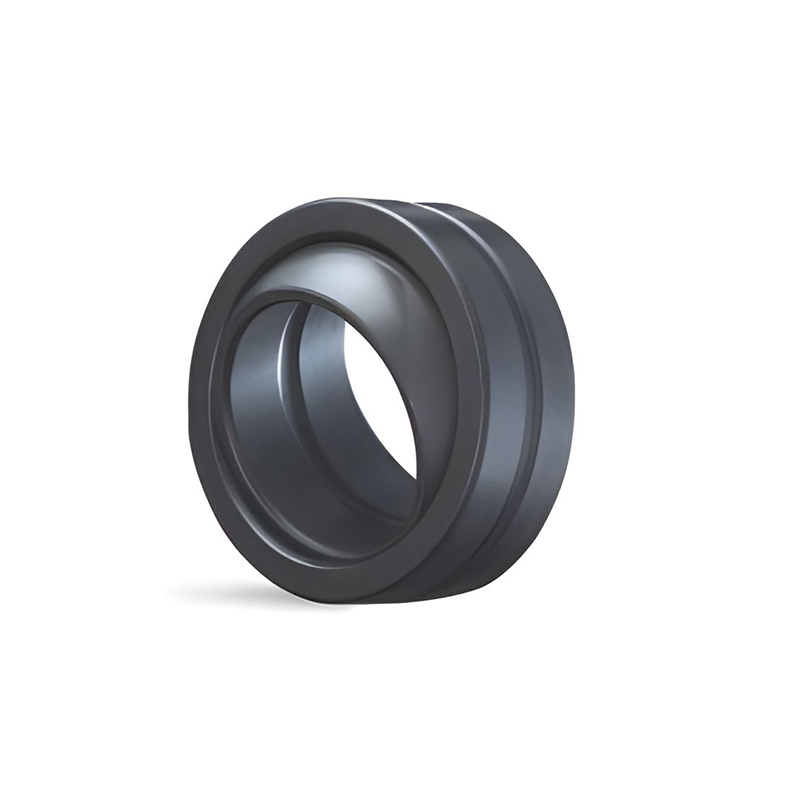
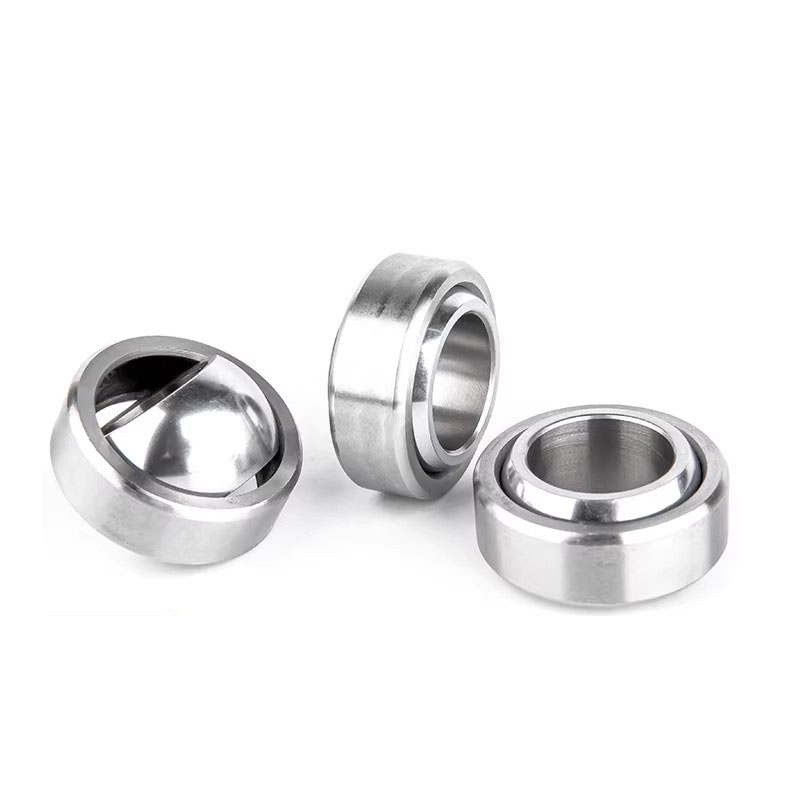
Rod end joint bearings are self-aligning mechanical transmission components integrating spherical sliding functions and rod end connection features. With inner and outer spherical sliding contact surfaces, they enable rotation and oscillation at any angle, widely applied in control and connecting rod mechanisms of various machinery. As a high-performance member of the rod end joint bearing family, POS type bearings stand out with unique structural design, outstanding load-bearing capacity and easy installation, becoming an indispensable core component for industrial flexible transmission and heavy-load scenarios.
Core Structure and Classification of POS Type Rod End Joint Bearings
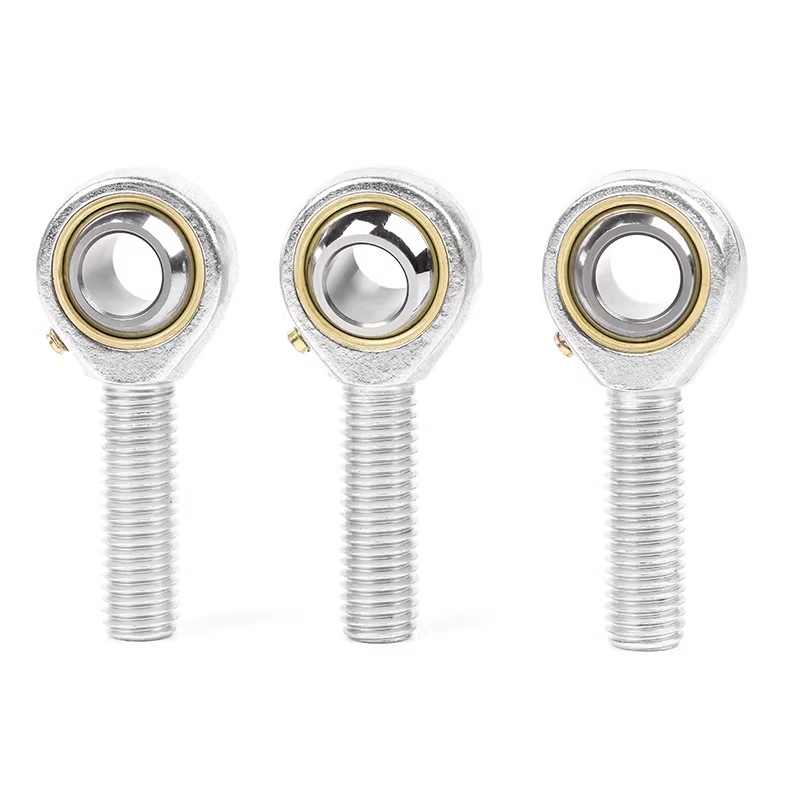
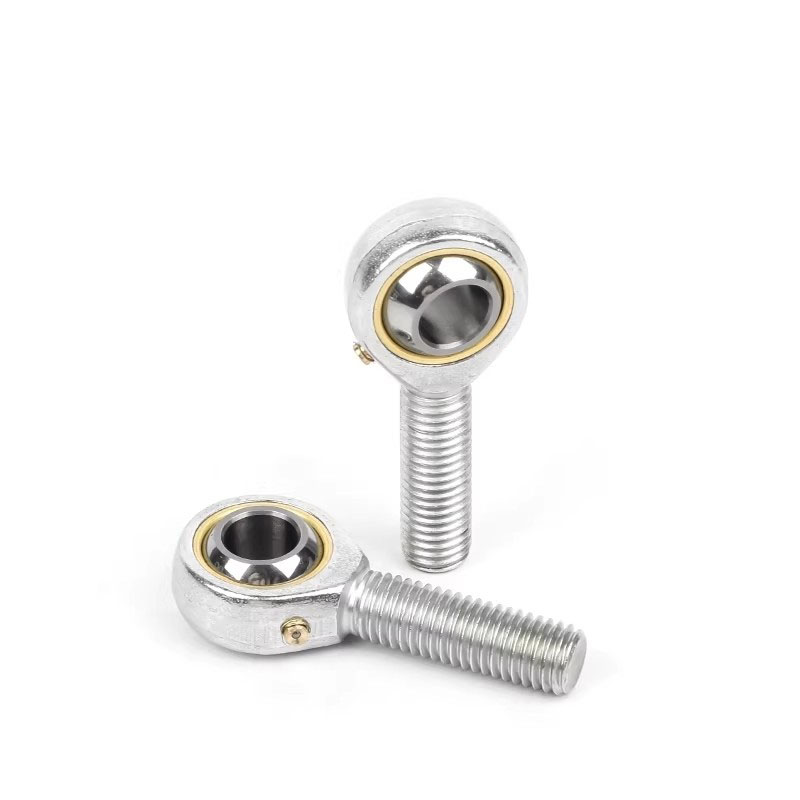
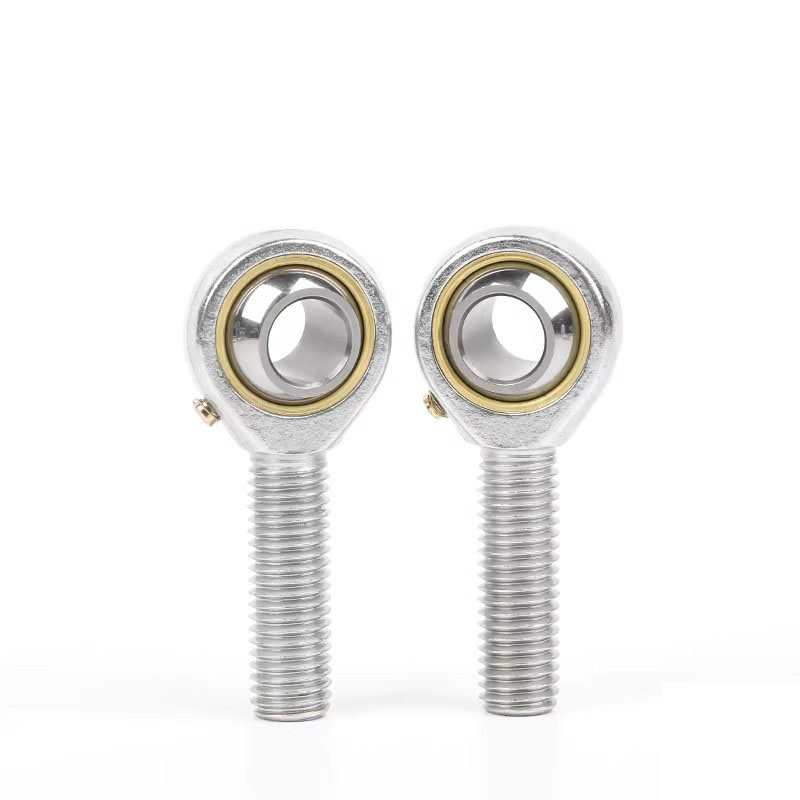
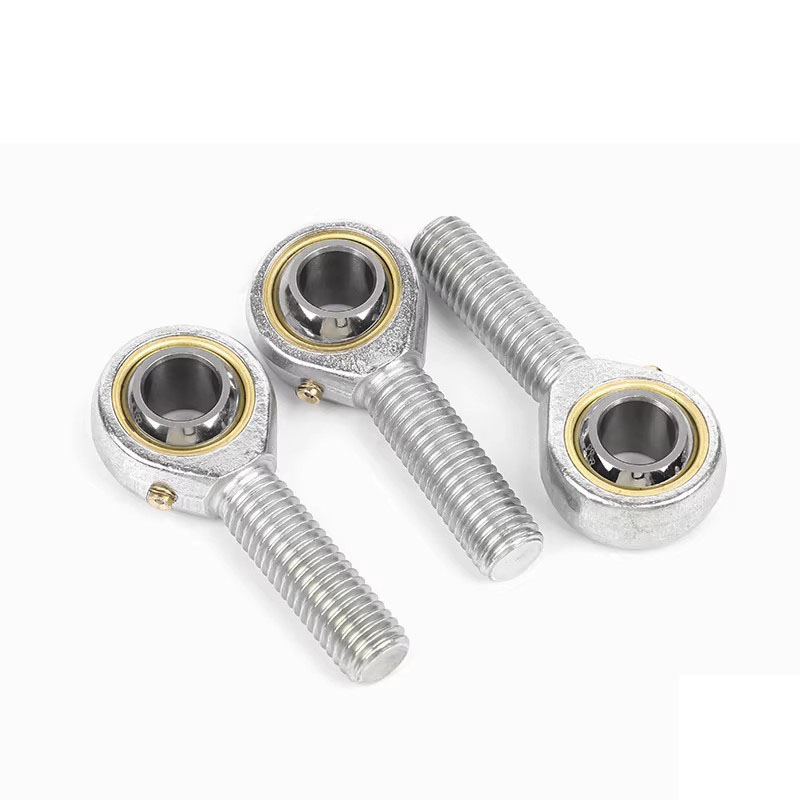
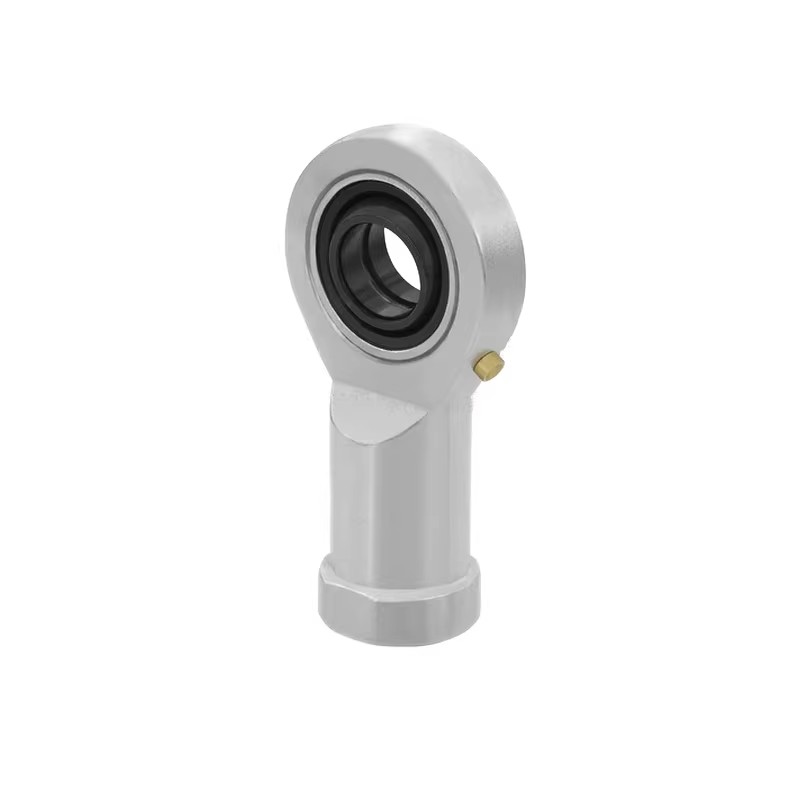
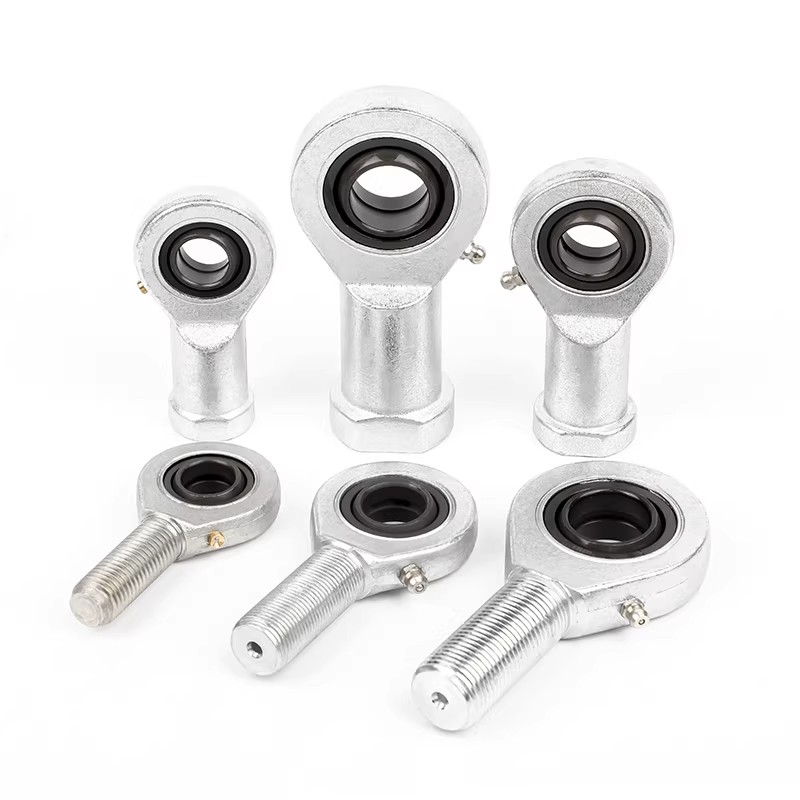
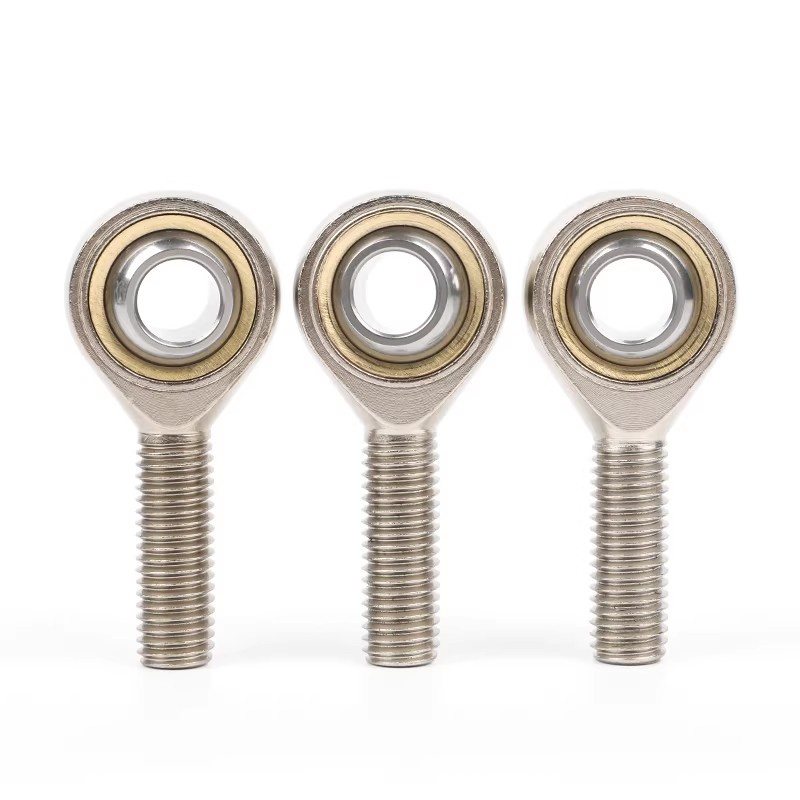
POS type rod end joint bearings belong to embedded oil-filled rod end joint bearings. Their structural design balances rigidity and wear resistance, and they are mainly composed of three core components: a chrome-plated joint inner ring, a special copper alloy bushing, and a zinc chromate-treated body. These three components are precision-processed and assembled to form a stable sliding friction pair, enabling smooth rotation and tilting movement—key to realizing flexible transmission and reliable heavy-load bearing. Compared with the PHS type bearing in the same series, the core difference of the POS type is that its body is processed with external threads, while the PHS type has internal threads. This design makes it suitable for different installation needs, allowing flexible connection with various mechanical components through threads, featuring convenient installation and firm connection that further enhances its practicality in industrial scenarios.
According to different lubrication methods, POS type rod end joint bearings are mainly divided into two categories, covering the requirements of different working conditions and ensuring wide adaptability:
● Oil-filled type (POS…A): The joint inner ring is in contact with a special copper alloy bushing, and an oil nozzle is reserved on the body. Regular oiling can be used for lubrication and maintenance, further improving wear resistance and service life—ideal for heavy-load scenarios that allow regular maintenance. Its joint inner ring undergoes quenching, hardening, and precision processing, resulting in excellent rigidity and load resistance to meet high-demand industrial applications.
● Non-oil-filled type (POS…EC): The body is bonded with a special PTFE inner lining reinforced by a copper alloy mesh, which can achieve self-lubrication without additional oiling. The sliding surface has little creep under load; the body is treated with zinc chromate, and the joint inner ring is chrome-plated, providing excellent corrosion resistance. As a maintenance-free bearing, it is especially suitable for oil-free fields such as food machinery and parts that cannot be regularly oiled, expanding its application scope.
In addition, POS type bearings adopt right-hand threads by default. If adaptation to left-hand thread scenarios is required, "L" should be added at the end of the model as an auxiliary mark, such as POS30L, which can be flexibly selected according to actual installation needs to ensure seamless matching with different mechanical structures.
Core Characteristics and Technical Advantages
With precise structural design and high-quality material selection, POS type rod end joint bearings have the following core characteristics, which can meet the harsh requirements of various industrial scenarios and support stable operation in flexible transmission and heavy-load environments:
(I) Excellent Load-bearing Capacity
As a small-volume, high-load bearing, the POS type can bear large radial loads and bidirectional axial loads simultaneously—perfectly matching the heavy-load demand highlighted in the title. Its load-bearing performance is mainly indicated by the dynamic load capacity Cd and static load capacity Cs. The dynamic load capacity is used to calculate bearing life, while the static load capacity refers to the maximum static load that the bearing can bear without permanent deformation. In practical applications, its maximum working load must comply with relevant standards. For example, when the load direction of the oil-filled POS…A type is fixed, it is recommended not to exceed 0.3Cd of the dynamic load capacity to ensure long-term stable operation and reduce maintenance costs.
(II) Good Wear Resistance and Corrosion Resistance
The joint inner ring is chrome-plated after quenching and hardening, featuring high surface hardness and strong wear resistance, which can effectively reduce losses caused by sliding friction and extend service life. The body is treated with zinc chromate, which can effectively resist the erosion of corrosive media and extend the bearing's service life in harsh environments. The special copper alloy bushing of the oil-filled model has good running-in performance, and the PTFE inner lining of the non-oil-filled model has excellent self-lubrication performance. Both types can achieve low-friction operation, further improving wear resistance and ensuring stable flexible transmission.
(III) Self-alignment and Flexible Transmission
Relying on the spherical sliding contact structure, the POS type rod end joint bearing has good self-alignment ability—core to realizing flexible transmission. When the coaxiality between the support shaft and the bearing housing hole is large, it can still work normally. This can effectively compensate for installation deviations and displacement deviations during mechanical operation, avoid bearing jamming or excessive wear, and ensure the smoothness of the transmission process. At the same time, it can realize multi-angle rotation and tilting movement, adapting to the complex transmission needs of mechanical components, and is especially suitable for low-speed swing and tilting movement scenarios.
(IV) Convenient Installation and Strong Adaptability
The external thread design of the body allows direct connection with mechanical components of corresponding threads without additional adapters, resulting in high installation efficiency and saving time and labor costs. The models cover the 5~18 series (small-size models with an "A" suffix) and larger sizes (such as POS30, etc.). Different sizes correspond to different inner diameter, outer diameter, and height parameters, which can be flexibly selected according to specific equipment needs and adapt to various mechanical structures. In addition, its overall structure is compact and small in size, suitable for scenarios with limited installation space, and can help realize the miniaturization and lightweight of mechanical design.
Explanation of Key Technical Parameters
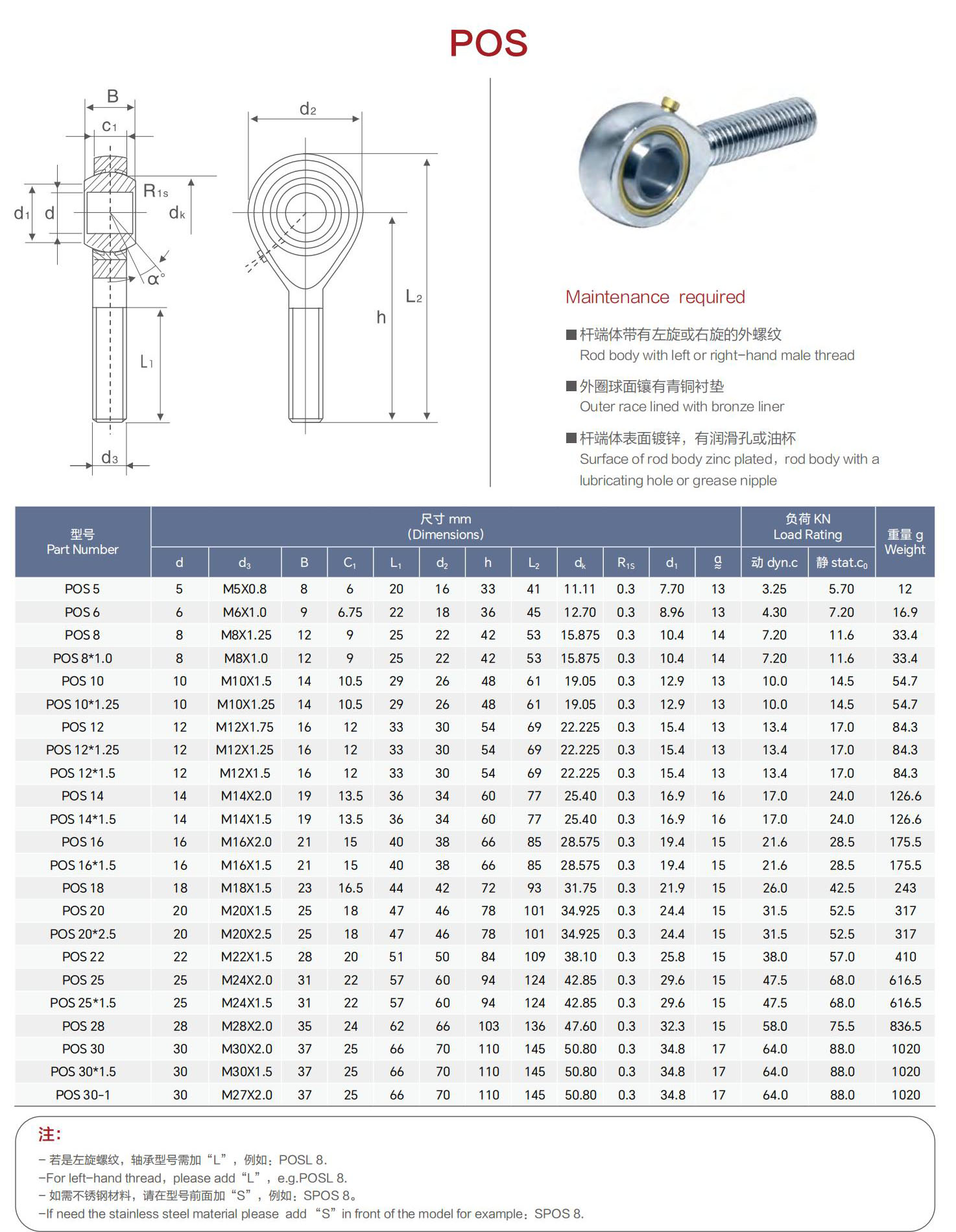
The model of a POS type rod end joint bearing consists of marks, sizes, and auxiliary marks, such as POS10A (oil-filled type, inner diameter 10mm, small-size series) and POS30EC (non-oil-filled type, inner diameter 30mm). Its core technical parameters can refer to the following standards (taking the common model POS30 as an example) and general specifications, providing clear reference for selection and ensuring it meets the required performance for flexible transmission and heavy load:
|
Parameter Name
|
Specific Specifications (Example: POS30)
|
General Specifications
|
|
Inner Diameter (d)
|
30mm
|
The tolerance grade is H7 to ensure the fit accuracy with the shaft
|
|
Outer Diameter (d2)
|
70mm
|
Increases with the model size, adapting to different installation spaces
|
|
Height (L2)
|
145mm
|
Overall height including the external thread part, which affects installation adaptability
|
|
Thread Specification (G)
|
M30*2
|
External thread design, with specifications matching the bearing size
|
|
Weight
|
1070g
|
Increases with size, adapting to equipment load requirements
|
|
Radial Internal Clearance
|
Maximum 0.035mm
|
General standard for embedded types, ensuring transmission flexibility
|
|
Temperature Coefficient (ft)
|
1 (-30~80℃), 0.7 (120℃)
|
When the temperature rises, the dynamic load capacity should be adjusted according to this coefficient
|
Note: The parameters of POS type bearings from different brands (such as IKO) may have slight differences; please refer to the product specification sheet for details. During installation, under normal working conditions, the tolerance grade of the shaft is recommended to be h7, and the tolerance grade of the bearing housing is recommended to be H7. When there is an undirected load, the grade can be adjusted accordingly to ensure fit accuracy and operational stability, maintaining the excellent performance of flexible transmission and heavy-load bearing.
Application Scenarios and Fields
With their diverse types and excellent performance in flexible transmission and heavy load-bearing, POS type rod end joint bearings are widely used in the control mechanisms and connecting rod mechanisms of various industrial machinery, covering many fields, including:
● General machinery field: Machine tools, textile machinery, packaging machinery, etc. It is used for the connection and transmission of various connecting rods and rockers. By virtue of its self-alignment ability, it compensates for installation deviations, ensures the smooth operation of equipment, and improves transmission efficiency and stability—fully exerting its advantages in flexible transmission.
● Construction machinery field: Hydraulic systems and connecting rod mechanisms of equipment such as excavators, loaders, and cranes. It can bear large radial and axial loads, resist impact and wear under harsh working conditions, adapt to complex outdoor operating environments, and its corrosion resistance and high rigidity can extend the service life of equipment—ideal for heavy-load industrial scenarios.
● Food machinery field: The non-oil-filled POS…EC type bearing is suitable for application in food processing equipment due to its maintenance-free and oil-free characteristics, avoiding food contamination by lubricating oil and meeting the transmission needs of equipment to ensure safe and hygienic production, while maintaining stable flexible transmission.
● Other fields: Automobile steering systems, marine equipment, industrial robots, aerospace-related auxiliary equipment, etc. Among them, in the joint connection of industrial robots, it can realize multi-degree-of-freedom flexible transmission; in marine equipment, it resists the erosion of humid salt spray environments by virtue of its corrosion resistance, adapting to the requirements of various complex working conditions and supporting both flexible transmission and heavy-load demands.
Selection and Usage Notes
(I) Selection Points
1. Clarify working condition requirements: According to whether regular oiling is possible in the use scenario, select the oil-filled type (POS…A) or non-oil-filled type (POS…EC). Select based on the load size, combined with the dynamic load capacity Cd and static load capacity Cs, to ensure that the bearing load does not exceed the recommended maximum value, avoiding excessive wear or damage and maintaining its high performance in flexible transmission and heavy load-bearing.
2. Confirm installation parameters: Select the POS model with the corresponding inner diameter, outer diameter, and height according to the installation space and shaft diameter of the equipment. Clarify the thread direction, and select the model with the "L" mark when left-hand threads are needed to avoid installation misalignment, ensuring the bearing can fully play its role in flexible transmission and heavy-load scenarios.


 English
 Español
 Deutsch
 عربى
عربى
 +86 17398543323