Ball Nut Housing: Product Overview
I. What is the product?
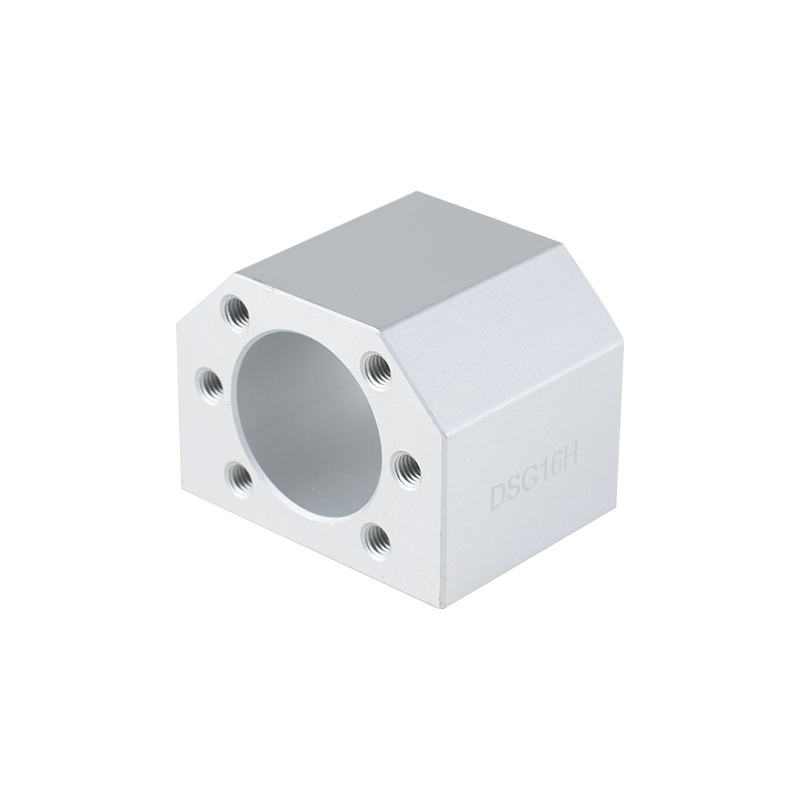
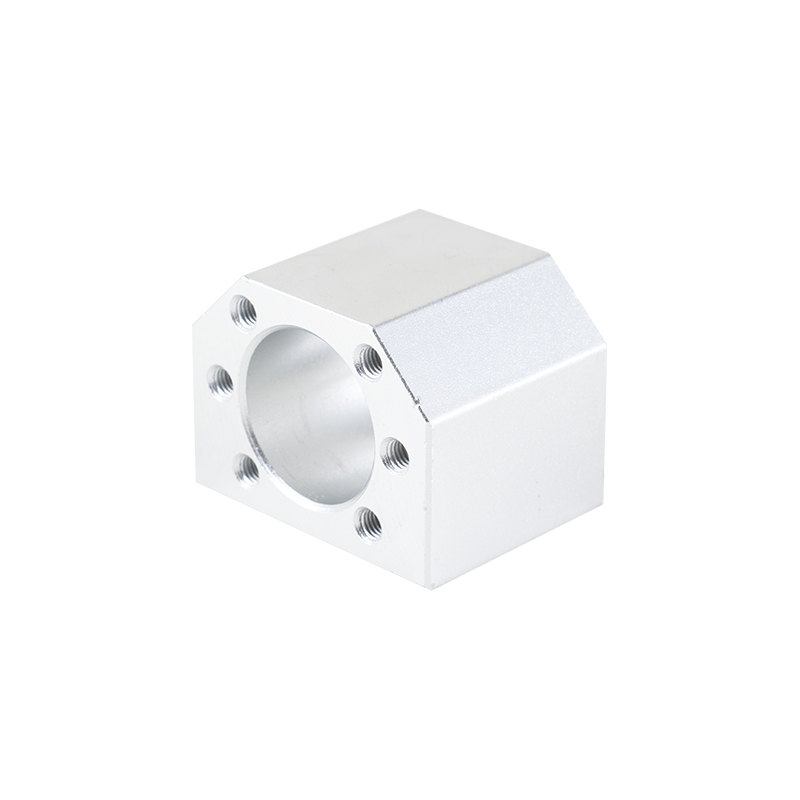
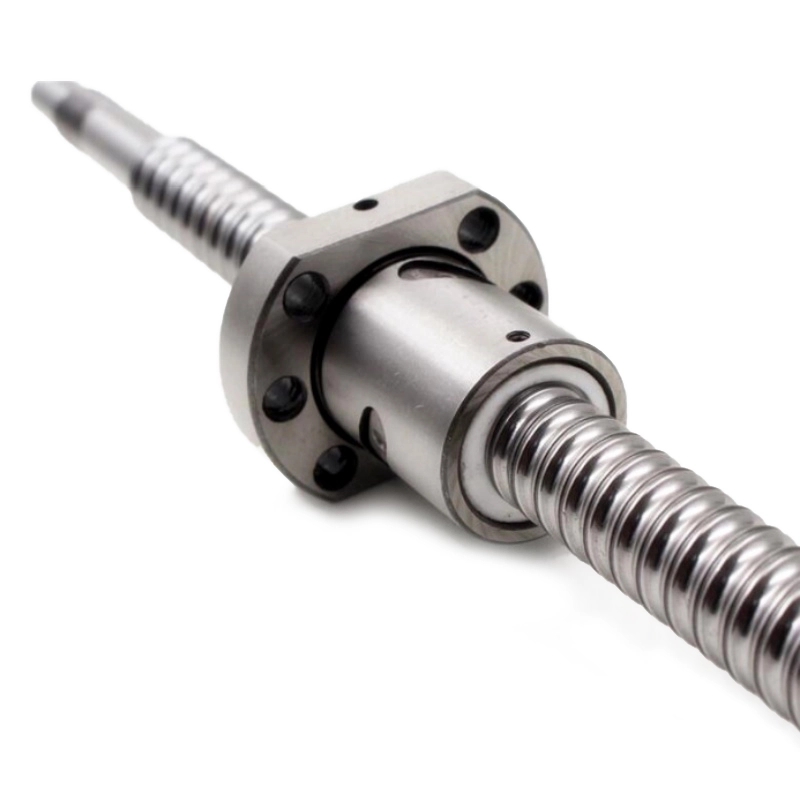
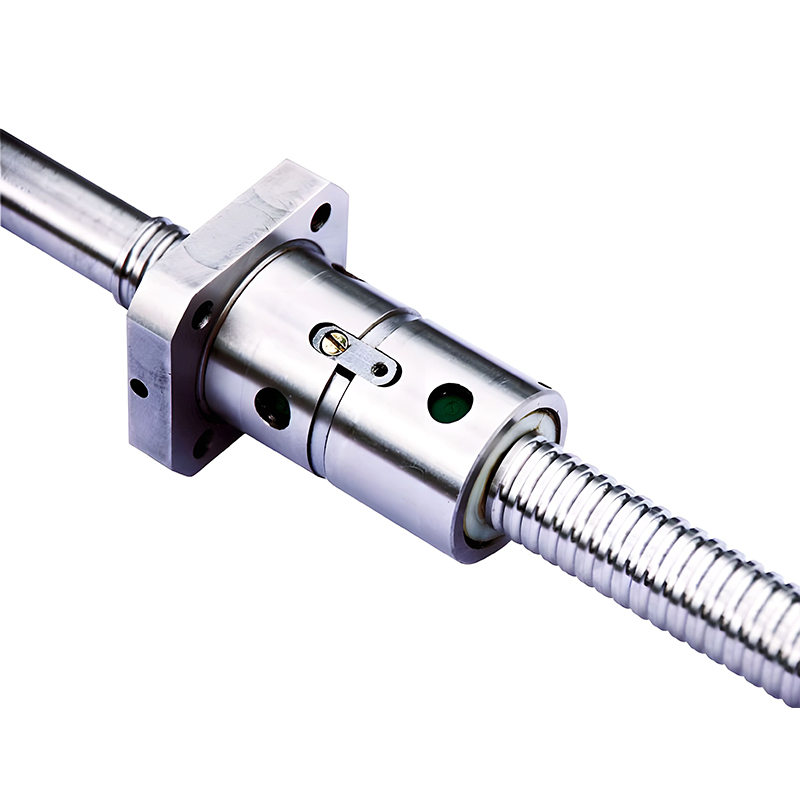
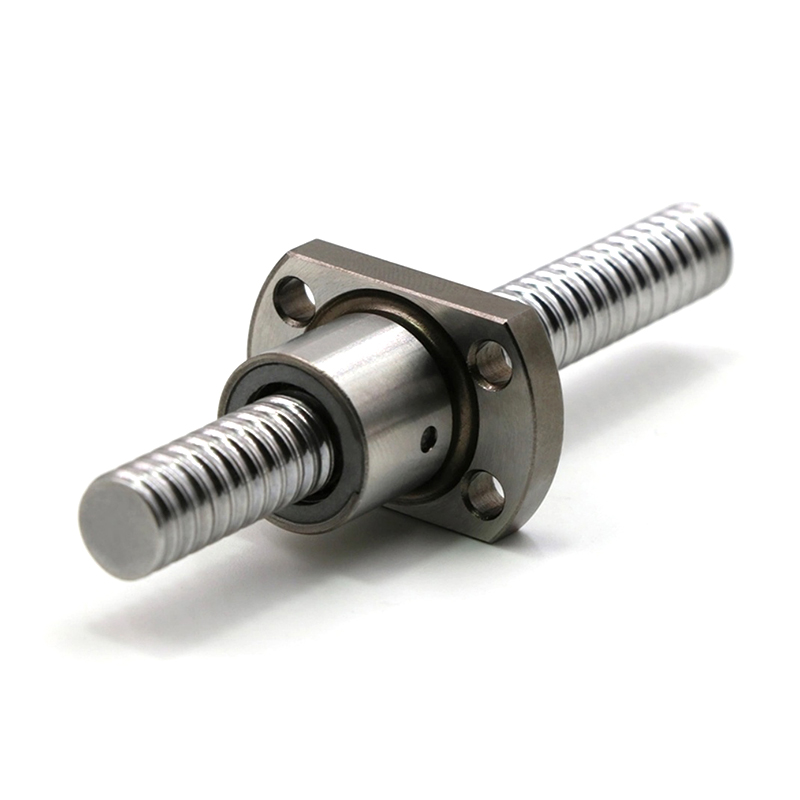
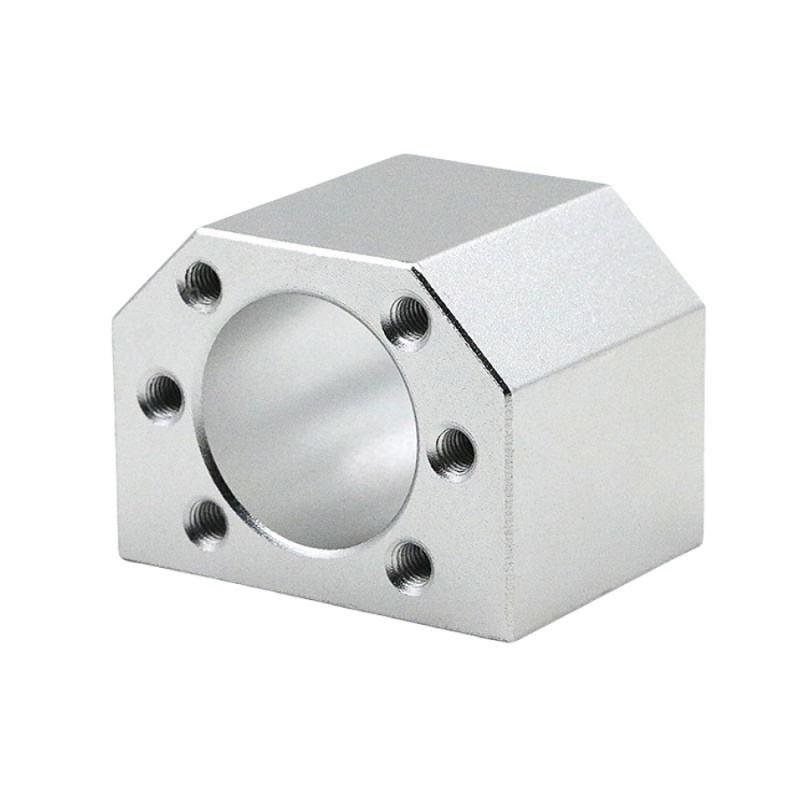
Simply put, a ball nut housing is a mounting bracket designed for ball screws. While the ball screw converts the motor's rotary motion into linear motion, the housing fits over the ball nut to securely anchor it to the equipment's sliding platform, preventing misalignment or wobbling caused by operational forces. Mainstream market options include anodized aluminum alloy and quenched 45# steel versions; these are ready-to-install components requiring no additional precision machining, serving as universal, non-standard accessories for linear transmission systems.
II. Specific Applications
- Small-scale CNC equipment: Z-axis drives for desktop engraving/milling machines and EDM drilling machines (compatible with SFU1605/2005 screws) for precise vertical tool feeding; typically, one housing is used per machine.
- Automated assembly lines: Modules for transferring photovoltaic silicon wafers and telescopic forks for automated storage and retrieval systems (AS/RS); designed for high-frequency reciprocating motion, often exceeding 1,200 cycles per day.
- Industrial 3D printers: Y-axis drives for large-scale resin printers; lightweight aluminum alloy versions are used to prevent platform deformation.
Automotive component inspection fixtures: Tooling for checking automotive light gaps; steel versions withstand static axial loads, ensuring consistent inspection tolerances.
III. Purchasing Motivations & Solutions for Overseas Customers
1. Private-label product launches: Small-to-medium-sized linear module manufacturers in Europe and the US often face inconsistent tolerances with third-party housings; self-branded/OEM sourcing allows them to standardize transmission accuracy and avoid quality-related complaints. 2. Bulk retail supply: Industrial component distributors on Amazon or European e-commerce sites can round out their ball screw product lines by offering complete "screw + housing" sets. 3. Cost optimization: Serving as a cost-effective alternative to OEM housings from brands like THK or HIWIN, offering a 27%–32% reduction in procurement costs while maintaining equivalent precision. Key solutions for overseas customer pain points: Reducing lead times from the 4–6 weeks typical of Western OEMs to just 3–7 days for in-stock items; and offering compatibility with niche or custom-modified screws that are often incompatible with standard OEM accessories. IV. OEM/ODM Information
OEM: Supports customer-specified laser marking and modifications to external apertures using our existing molds; MOQ: 50 units; Lead time: 7 days. ODM: Supports custom housing shapes based on customer-specified mounting hole patterns and heights; MOQ: 300 units; Requires customer-provided 3D drawings; Lead time: 18 days; Internal transmission fit tolerances remain unchanged.
V. Solutions to Customer Pain Points
Pain Point Solutions: 1. Standard market nut housings often exhibit end-face perpendicularity deviations exceeding 0.05mm, leading to ball screw binding and abnormal transmission noise during long-term use. Our products undergo 100% factory inspection, with end-face perpendicularity strictly controlled within 0.02mm, making them suitable for high-frequency reciprocating motion. 2. For high-humidity and salt-spray environments (such as coastal Southeast Asia and Europe), all aluminum alloy models feature a uniform 15μm hard-anodized finish to prevent housing corrosion and mounting hole tolerance issues.
VI. Customer Eligibility/Access
Customer Eligibility: We supply exclusively to B2B purchasers, including linear module manufacturers, automation equipment manufacturers, and cross-border industrial component distributors. We do not accept orders from individual DIY enthusiasts or small-scale C2C orders for 1–2 units for personal use, nor do we provide after-sales service for individual retail purchases.
VII. FAQ
Q1: Is it compatible with trapezoidal lead screws?
A: It is compatible only with ball screws; the outer diameter of trapezoidal lead screw nuts does not match, making assembly impossible.
Q2: Can you provide EN10204 material certificates?
A: Yes, third-party material traceability reports can be provided free of charge for both aluminum alloy and carbon steel products.


 English
 Español
 Deutsch
 عربى
عربى
 +86 17398543323